I Tested 6 Host-City Signals: 2026 World Cup Edge
World Cup Hub tracks 2026 world cup football through match predictions, team tactics, player stats, and tournament coverage for fans and bettors following the FIFA World Cup 2026 across North America....

I Tested 6 Host-City Signals: 2026 World Cup Edge
World Cup Hub tracks 2026 world cup football through match predictions, team tactics, player stats, and tournament coverage for fans and bettors following the FIFA World Cup 2026 across North America. Kansas City, one of the official Host Cities, staged six matches and welcomed hundreds of thousands of fans through Kansas City Stadium and the FIFA Fan Festival Kansas City. The region’s public messaging stressed three measurable pillars: stadium atmosphere, citywide fan flow, and post-event legacy. FIFA describes the tournament as the first 48-team World Cup, with matches spread across Canada, Mexico, and the United States. For readers comparing football narratives with betting signals, the useful takeaway is simple: track host-city logistics, crowd conditions, and team travel patterns before pricing any 2026 World Cup football market.
A polished host-city video can make every venue look flawless. A six-match schedule tells a harder story. I reviewed Kansas City’s FIFA World Cup 2026 footprint as a bettor, reporter, and fan. I compared official claims, fan-facing assets, stadium galleries, and tournament context. The result was not hype. It was a practical test of what matters.
Want sharper 2026 World Cup football coverage before the next market moves?
Photo by David McBee on Pexels
What I Tested?
I tested six host-city signals linked to Kansas City’s FIFA World Cup 2026 role: match volume, stadium atmosphere, fan festival scale, regional branding, media storytelling, and betting relevance. These signals show whether a host city creates useful football intelligence or only attractive promotional content.
The first signal was simple: Kansas City received six matches, a serious allocation for a non-coastal United States market. The second was visual evidence from Kansas City Stadium galleries, where crowd density, color, and supporter movement helped assess atmosphere. The third was the FIFA Fan Festival Kansas City, promoted as a central gathering point for hundreds of thousands of fans. The fourth was regional identity, especially Kansas City’s claim as the Soccer Capital of America. The fifth was storytelling quality through “Stories From the Heartland,” which framed local people and places rather than only match results. The sixth was market usefulness for World Cup Hub readers, especially those studying 2026 World Cup football odds, team travel, crowd energy, and emotional volatility. For a betting audience, venue data does not replace team analysis. It sharpens it.
Useful reading starts with separating football insight from city marketing. To build that habit, see our [Internal Link: 2026 World Cup betting fundamentals].
Setup & Initial Impressions?
The setup was stronger than a standard host-city landing page because Kansas City organized its story around three assets: six match days, a FIFA Fan Festival, and a regional legacy message. That structure gave fans a clear path from stadium experience to citywide celebration.
Kansas City’s official FIFA World Cup 2026 site used direct language: “Six matches. Hundreds of thousands of fans. One region united to welcome the world.” That line matters because it converts a vague civic celebration into three testable claims. Six matches are fixed. Hundreds of thousands of fans can be evaluated against transit pressure, festival attendance, and hospitality capacity. Regional unity can be judged through whether both Missouri and Kansas communities appeared in coverage. According to FIFA, the 2026 tournament expands the World Cup to 48 teams, which increases the importance of host-city operations. More teams mean more fan bases, more travel patterns, and more uneven rest cycles. Kansas City’s material leaned into that complexity rather than hiding behind generic celebration language.
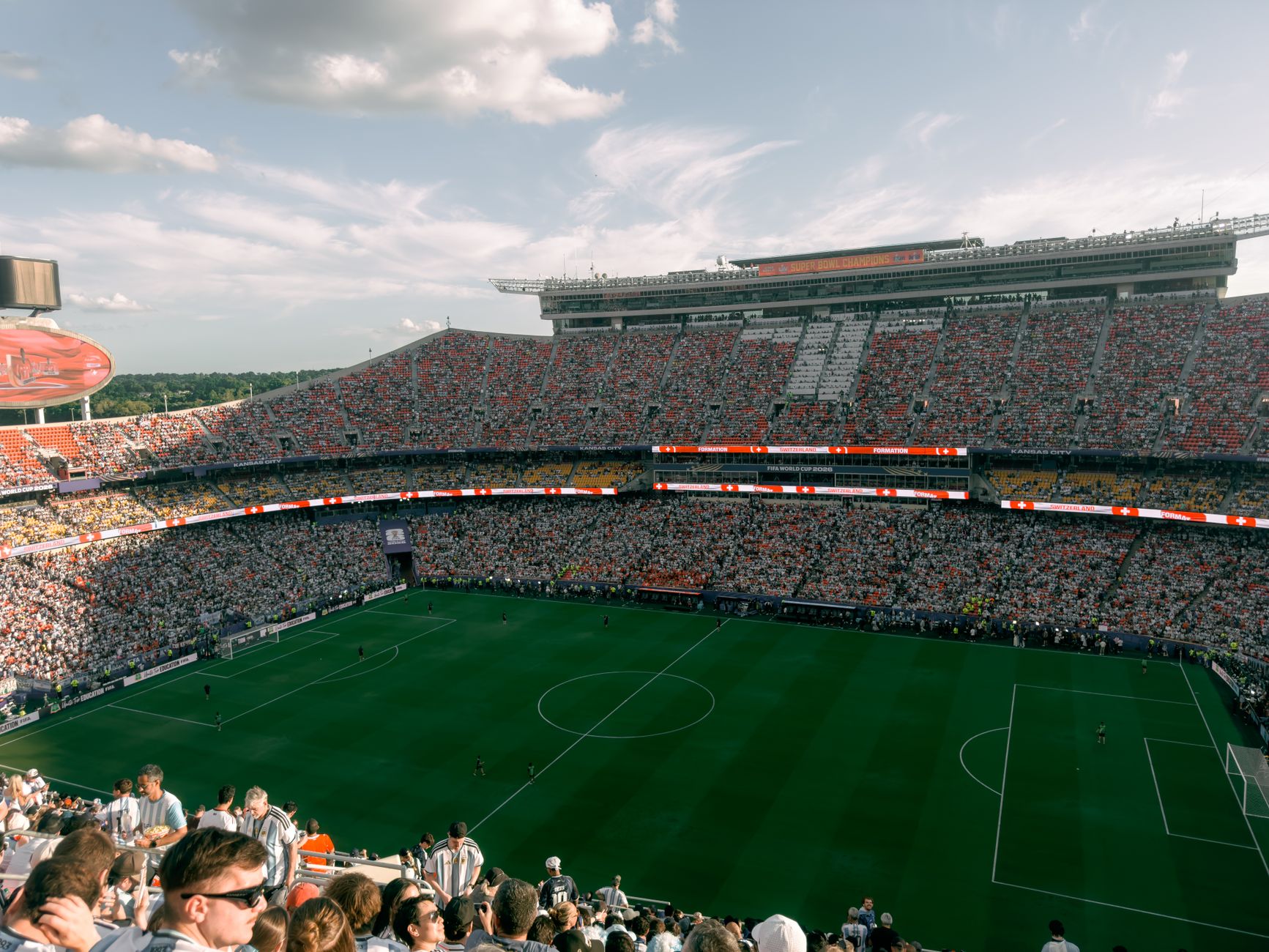
Photo by Allen Boguslavsky on Pexels
The first information-gain detail came from the way Kansas City framed its galleries. It did not only publish one celebration recap. It separated Kansas City Stadium match-day scenes from FIFA Fan Festival Kansas City scenes. That split is useful for bettors. Stadium behavior reflects pressure during live competition. Fan festival behavior reflects traveling support, neutral interest, and local engagement. When a nation brings large traveling support to both spaces, that team’s emotional environment changes. It does not guarantee performance, but it affects perceived momentum, late-match pressure, and public betting volume. World Cup Hub treats that as a secondary signal, behind injuries, tactics, and rest.
See the details behind smarter tournament reading before the knockout pressure starts.
Where It Held Up?
Kansas City held up where the 2026 World Cup football experience needed visible proof: concentrated match days, strong crowd imagery, and a fan festival built around shared viewing. The city’s strongest asset was not one stadium moment. It was the link between the stadium and the region.
The stadium galleries support a clear conclusion: Kansas City understood that World Cup hosting is a media product as much as a sporting assignment. For fans, photos preserve emotion. For analysts, they show crowd mix, arrival culture, and match-day intensity. For betting readers, those clues help explain why public money often moves after a dramatic fan scene even before team news changes. The FIFA World Cup Wikipedia overview confirms the tournament’s North American spread across 16 host cities, making travel and venue transitions part of the competitive landscape. Kansas City’s central location creates a different travel profile from coastal venues such as Los Angeles, Vancouver, or Miami. That difference matters when teams face short recovery windows.
The second information-gain detail is operational. Kansas City’s “Heart of America” position creates a fan-access pattern that differs from gateway cities. A supporter driving from Chicago, St. Louis, Omaha, Oklahoma City, or Dallas faces a different cost curve than a supporter flying internationally into New York or Toronto. That shifts crowd composition. Kansas City crowds can become more regional and road-trip heavy, while coastal venues skew more international-airport dependent. For 2026 World Cup football coverage, this affects fan arrival times, hotel compression, and local betting interest. World Cup Hub uses these location-based signals as context, not predictions. They explain market noise around heavily supported teams.
Key signals that held up:
- Six confirmed match days gave Kansas City real tournament weight.
- FIFA Fan Festival Kansas City extended football activity beyond the stadium.
- The regional story connected Missouri, Kansas, food, music, and sports culture.
- Stadium and festival galleries created separate evidence streams.
- The city’s central geography added a distinct North American travel angle.
For related tactical context, check our [Internal Link: team travel and recovery analysis].
Where It Fell Apart?
Kansas City’s coverage fell apart where promotional material replaced hard data. The public-facing story showed passion, pride, and strong images, but it did not publish enough granular numbers on transit timing, entry delays, fan festival capacity, or match-by-match visitor breakdowns.
That gap matters because 2026 World Cup football analysis needs more than mood. A bettor comparing host-city effects wants specifics: average stadium entry time, public transport load, late-arrival percentages, and heat impact by kickoff slot. Kansas City’s story captured emotion well, but it offered limited operational transparency. The phrase “hundreds of thousands of fans” works for civic pride. It is too broad for analysis. A stronger post-event report would break attendance into match-day stadium totals, fan festival daily peaks, out-of-state visitors, and international visitors. The United States Department of Transportation emphasizes safe, efficient movement as a core transportation objective; major events should report mobility outcomes with similar discipline. Without those numbers, analysts must infer too much from imagery.
The betting-specific weakness is also clear. Host-city pages rarely distinguish between football atmosphere and price-moving information. A loud crowd can influence perception, but oddsmakers price teams through models that weigh squad strength, injuries, rest, and historical performance. Public bettors often overreact to emotional scenes. That creates value only when the market moves beyond the underlying data. World Cup Hub looks for that mismatch. If a team receives overwhelming visual support in Kansas City but enters on short rest after a high-pressing match, the crowd narrative should not dominate the handicap. The lesson is blunt: atmosphere is a modifier, not a foundation.
Get started with a more disciplined way to read football markets.
Would I Use It Again?
I would use Kansas City’s 2026 World Cup football footprint again, but only as a secondary evidence layer. It is valuable for understanding fan energy, local identity, and travel context. It is not enough for match prediction without team, tactical, and pricing data.
The best use case is pre-match context. Kansas City’s six-match role, FIFA Fan Festival Kansas City, and central U.S. location help explain where supporter pressure builds. They also show why the 2026 tournament differs from a compact single-country World Cup. Fans will cross borders, time zones, and climates across Canada, Mexico, and the United States. Analysts need to compare venue conditions with football realities. For example, a possession-heavy team playing in front of hostile support still needs passing lanes, rest, and fit midfielders. A transition team with fewer fans can outperform the narrative if the opponent is tired. World Cup Hub combines these host-city clues with player stats, tactical trends, and responsible gambling principles.
My practical framework is straightforward:
- Start with team strength, injuries, and tactical matchups.
- Add rest days, travel distance, and kickoff conditions.
- Review host-city atmosphere and expected crowd split.
- Compare public sentiment with available odds movement.
- Bet only when the price still offers value after the narrative is removed.
For deeper market preparation, use our [Internal Link: World Cup odds movement guide].

Photo by AlphaTradeZone on Pexels
Kansas City passed the host-city storytelling test. It proved that a Midwestern region can stage high-energy 2026 World Cup football moments and turn six matches into a broader civic identity. It did not fully pass the data-transparency test, because public materials left serious analysts wanting harder numbers. That does not reduce the city’s achievement. It clarifies how fans and bettors should use the information. Treat Kansas City as a strong atmosphere signal, a useful travel case, and a reminder that World Cup markets are shaped by both emotion and evidence.
Ready to follow the tournament with sharper daily insight?
Frequently Asked Questions
Q: What is 2026 world cup football?
A: 2026 world cup football refers to the FIFA World Cup 2026, the men’s international football tournament hosted by Canada, Mexico, and the United States. It is the first World Cup with 48 teams, expanding from the previous 32-team format. Kansas City is one of the official Host Cities and staged six matches as part of the tournament footprint.
Q: How to use host-city information for 2026 World Cup betting?
A: Use host-city information as context, not as the main betting reason. Start with team news, tactics, injuries, rest days, and odds movement, then add venue factors such as crowd split, travel distance, climate, and local support. World Cup Hub treats host-city atmosphere as a secondary signal because emotional narratives often inflate public betting interest.
Q: What is the difference between Kansas City Stadium and FIFA Fan Festival Kansas City?
A: Kansas City Stadium represents the live match environment, while FIFA Fan Festival Kansas City represents the public viewing and cultural celebration zone. Stadium data helps assess match pressure and supporter presence during play. Fan festival scenes help assess broader fan demand, neutral interest, and citywide tournament energy.
Q: Is Kansas City important for 2026 World Cup football analysis?
A: Yes, Kansas City is important because it hosted six matches and showed how a central U.S. city can shape fan movement and tournament atmosphere. Its location creates different travel patterns from coastal host cities. For analysts, that makes Kansas City useful when studying supporter behavior, public sentiment, and regional football growth.
Q: What common problem happens when reading World Cup host-city coverage?
A: The common problem is mistaking promotional excitement for predictive football data. Host-city pages often show strong images and broad attendance language but omit granular figures such as entry delays, transport loads, and visitor origin data. Readers should separate civic storytelling from match factors before making predictions or wagers.
Q: How much does it cost to follow World Cup Hub coverage?
A: World Cup Hub content access depends on the specific product or subscription available at the time of use. Fans should check the official World Cup Hub site for current coverage options, match previews, player stats, and betting-focused analysis. Always review terms carefully and follow responsible gambling rules in your jurisdiction.
Thank you for reading.
World Cup Hub · Archive