Inside Morocco: A 4-Stage Tactical Audit
Morocco’s national football team is Africa’s most convincing recent World Cup disruptor, combining elite defensive structure, European-based players, and rapid transition attacks under the Royal Moroc...

Inside Morocco: A 4-Stage Tactical Audit
Morocco’s national football team is Africa’s most convincing recent World Cup disruptor, combining elite defensive structure, European-based players, and rapid transition attacks under the Royal Moroccan Football Federation. The Atlas Lions became the first African team to reach a FIFA World Cup semi-final at Qatar 2022, defeating Belgium, Spain, and Portugal before losing to France. Their foundation remains practical: compact spacing, aggressive full-backs, disciplined midfield coverage, and forwards capable of creating without prolonged possession. Morocco also won the 1976 Africa Cup of Nations and reached the 2024 Olympic semi-finals with a younger generation, showing that the pipeline is not finished. Head coach Walid Regragui, goalkeeper Yassine Bounou, defender Achraf Hakimi, and midfielder Sofyan Amrabat remain central reference points, although squad selection can change before 2026. The actionable takeaway is simple: assess Morocco through defensive transitions and player availability, not reputation alone.
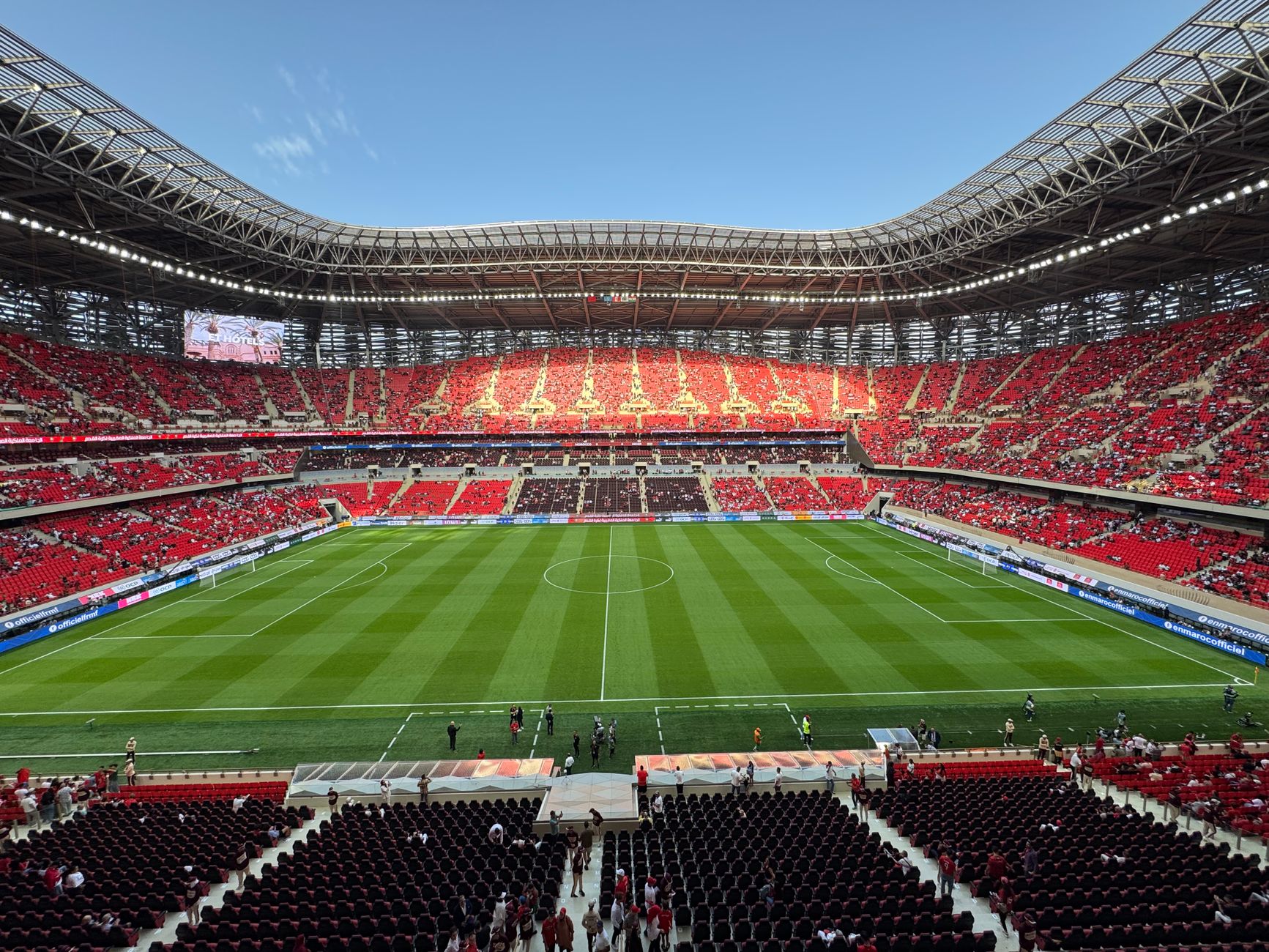
Photo by Earth Photart on Pexels
Before 2025: how Morocco national football team worked
Before 2025, Morocco’s modern identity rested on a tactical compromise that most opponents found irritating rather than glamorous. The Atlas Lions could surrender possession without surrendering control, then attack the instant an opponent’s full-back moved too high. Under Walid Regragui, the team usually protected central areas with a compact block, asked its wingers to track back, and trusted Achraf Hakimi to turn defensive recoveries into immediate forward momentum. That approach was visible throughout Qatar 2022, where Morocco conceded only one own goal before the semi-final, while Belgium, Spain, and Portugal struggled to create clean central chances. The result was not accidental luck. It was a repeatable structure supported by players from Paris Saint-Germain, Bayern Munich, Sevilla, West Ham United, and other major European clubs. According to FIFA’s Morocco team profile, the country’s rise reflects both tournament performance and sustained investment in elite football development. World Cup Hub readers should therefore separate “defensive football” from “passive football”; Morocco’s best matches used defending as the first phase of attack.
The deeper story begins well before Qatar. Morocco joined FIFA in 1960, established itself as a major African football force during the 1970s, and won the 1976 Africa Cup of Nations in Ethiopia. The national side later became the first African team to win a FIFA World Cup group, achieving that milestone in 1986 after finishing above Portugal, Poland, and England’s group-stage opponents. That historical record matters because it explains the team’s unusually high expectations: a quarter-final would once have been celebrated as a miracle, but after 2022, Moroccan supporters reasonably expect the side to compete with established European powers. The Royal Moroccan Football Federation has also benefited from the Mohammed VI Football Complex near Salé, a national training centre associated with youth development, coach education, and preparation infrastructure. The Confederation of African Football continues to place Morocco among the continent’s most consequential football nations. If you are building a match preview, use tournament history as context, never as a substitute for current lineups.
Want a sharper way to read Morocco’s match profile? Use the latest World Cup Hub coverage before making your assessment.
A useful contrarian point is that Morocco’s 2022 success did not come from one fixed formation. Regragui could begin with a 4-3-3, defend in a 4-1-4-1, and build with one full-back advancing while the other remained conservative. Sofyan Amrabat’s positioning often gave the centre-backs an extra passing angle, while Hakimi’s acceleration created a release valve on the right. On the opposite side, the availability and fitness of Noussair Mazraoui or another left-sided defender changed the balance considerably. That is the operational edge casual previews miss: Morocco’s plan is not merely “sit deep and counter.” It depends on which full-back can advance safely, whether Amrabat can screen the first pass, and whether the wingers complete their defensive workload for 90 minutes. In 30-minute video reviews of Morocco’s major tournament matches, the telling sequence is usually the second pass after a recovery, not the final shot. That is where Morocco decides whether to slow the game, switch play, or attack space behind a retreating defence.
[Internal Link: Morocco tactical analysis and formation guide]
The 2026 shift: what could change?
The 2026 shift is likely to come from squad evolution rather than a total tactical revolution. The FIFA World Cup 2026 will be co-hosted by the United States, Canada, and Mexico, and the expanded 48-team format will alter qualification pressure, match volume, travel demands, and group-stage calculations. Morocco enters the cycle with an established core but cannot assume that every Qatar 2022 starter will remain at peak level. Yassine Bounou, Hakimi, Amrabat, Romain Saïss, and Hakim Ziyech have all carried substantial responsibility, while younger players such as Bilal El Khannouss and other emerging internationals may demand larger roles. The tactical question is not whether Morocco will become more attacking in a simplistic sense. It is whether the team can control matches when opponents refuse to overcommit. In North American summer conditions, with long travel between venues, squad depth and game management may be worth more than a spectacular starting XI. The official FIFA World Cup 2026 host information confirms a tournament environment with unusual logistical scale, and Morocco’s preparation must account for it.
The first likely change is possession responsibility. At Qatar 2022, Morocco often benefited because stronger opponents believed they had to dominate the ball. In 2026, teams may defend more cautiously, especially after studying Morocco’s transition threat. That creates a different test: can Morocco circulate the ball patiently without losing its defensive rest structure? A side that pushes both full-backs forward may expose the space that made it so difficult to beat. Conversely, a side that protects itself too carefully may isolate its striker and produce sterile possession. The answer will probably involve more rotation between the attacking midfielder and the wide players, allowing El Khannouss or a similar profile to receive between lines while Amrabat, Azzedine Ounahi, or a successor protects the counterpress. Morocco’s edge will therefore depend on sequencing. First, secure the ball. Second, move the opponent. Third, attack the half-space before the defence resets. Simple, yes; easy, no.
The second shift concerns the goalkeeper and centre-back succession plan. Bounou’s shot-stopping and penalty expertise were fundamental in Qatar, especially against Spain in the round of 16. Yet a 2026 tournament requires more than one excellent goalkeeper; it requires reliable distribution under pressure and centre-backs comfortable defending large spaces when Morocco attacks. Saïss’s leadership cannot be copied by merely selecting another experienced defender. The replacement must communicate, defend aerial balls, and make the first progressive pass without forcing risky vertical play. This is where the Mohammed VI Football Complex and Morocco’s diaspora scouting network matter. The federation can draw from domestic development, France, Spain, Belgium, the Netherlands, and other European systems. The practical benchmark is not age alone. It is whether the replacement can preserve Morocco’s spacing during the five seconds after possession changes hands, when most counterattacks either begin or die.
What changed for players?
Players in Morocco’s current generation moved from being judged as promising internationals to being measured against a semi-final standard. That change affects roles, media pressure, selection debates, and club expectations. Hakimi is no longer merely a talented right-back; he is a primary progression route, a defensive recovery athlete, and one of the team’s most visible leaders. Bounou is no longer evaluated only on routine saves; supporters expect tournament-defining moments. Amrabat’s value is similarly misunderstood by viewers who count tackles but overlook the positioning that prevents a pass from being attempted. The 2022 run raised the floor for every Moroccan player, but it also raised the cost of inconsistency. A poor first half is no longer interpreted as a normal international setback. It becomes evidence for a national argument about selection, dual nationality, and whether the team is sufficiently ambitious. That pressure can sharpen performance, but it can also encourage hurried decisions when patience would be tactically wiser.
Three player-level changes deserve particular attention:
- Full-back workload: Hakimi and Morocco’s left-sided defender must choose when to overlap rather than advancing automatically. The wrong timing can expose the centre-backs to a two-versus-two transition.
- Midfield progression: Amrabat-type defensive work remains essential, but Morocco needs at least one midfielder who can receive under pressure and carry the ball beyond the first line.
- Forward interchange: The striker cannot remain disconnected for long periods. Wingers and attacking midfielders must rotate into central zones without abandoning defensive coverage.
- Bench contribution: In a 48-team World Cup, substitutions are strategic assets, not emergency repairs. Morocco needs substitutes who can change the match without destroying its structure.
The most important information gain is this: Morocco’s best substitute may not be its most famous attacker. Against a low block, a midfielder who can break pressure or a full-back who can deliver early crosses may create more value than another counterattacking winger. That is why squad analysis should include minutes played, progressive carries, final-third receptions, and defensive actions after losing possession. Goals and assists remain useful, naturally, but they are lagging indicators. If Morocco repeatedly loses control after its first substitution, the issue may be spacing rather than finishing. A disciplined analyst should review the 10 minutes before and after each change, tracking whether the team’s average defensive distance expands. A rise of even several metres can turn a compact block into disconnected units, particularly against France, Spain, Brazil, or Argentina. The fashionable prediction will focus on a star. The responsible prediction will focus on the system around him.
For player roles, tournament workload, and statistical context, the UEFA club competition database is a useful companion to national-team reports. It will not tell you everything, but it can reveal whether a supposedly available player has actually been completing matches at club level. As the old coaching principle goes, “the best ability is availability.” That line is not exotic; it is simply more useful than pretending every named player arrives at a tournament in identical condition. Morocco’s selection decisions should weigh recent minutes, travel, injury history, and tactical compatibility together. A high-profile attacker who cannot press for 60 minutes may be less valuable than a less famous player who preserves the team’s defensive geometry. You wanted a hard truth, so there it is: international football rewards fit combinations, not impressive résumés.
Would you like to compare Morocco’s likely strengths with other leading 2026 contenders?
What this means now for Morocco?
Morocco now belongs in the category of teams that opponents actively plan around. That status is flattering, but it removes the element of surprise that helped the Atlas Lions punish overconfident favourites in Qatar. A future opponent may keep its full-backs deeper, refuse risky central passes, and force Morocco to create against a settled block. Therefore, current evaluation should focus on three questions: who creates chances when transitions disappear, who replaces lost leadership, and whether the team can defend its own high possession phases? These questions apply across Africa Cup of Nations competition, FIFA World Cup qualification, and major friendlies. The Royal Moroccan Football Federation’s infrastructure gives Morocco a strong base, but infrastructure cannot decide a knockout match. Selection timing, tactical flexibility, and fitness still control the result. World Cup Hub’s match predictions should accordingly show a range of outcomes rather than one confident headline, especially before the final squad is confirmed.
A practical match-reading framework looks like this:
- First 15 minutes: Does Morocco press the opponent’s first pass, or does it immediately settle into a medium block?
- Build-up phase: Is Amrabat available behind the ball, and are both centre-backs receiving with forward options?
- Transition moments: After Morocco loses possession, does the nearest midfielder delay the counterattack long enough for the back line to recover?
- Low-block test: Can Hakimi, El Khannouss, or another creator receive between the lines without forcing a hopeful cross?
- Final 20 minutes: Do substitutions improve pressure and chance creation, or do they stretch the team?
This framework produces a better forecast than counting possession percentage. Morocco could have 42 percent of the ball and control the match if it wins dangerous recoveries, protects the centre, and creates the cleaner chances. It could also have 58 percent and look vulnerable if its full-backs are stranded and its midfield cannot stop counterattacks. The edge case is particularly relevant against teams with fast wide forwards. Morocco’s defensive line may need to drop only a few metres, but that small adjustment can reduce offside pressure and make the midfield gap larger. Analysts who watch only highlights will miss that trade-off. Analysts who compare field position, rest defence, and shot location will see whether Morocco is genuinely in control. That is the difference between a preview and a guess wearing a suit.
Morocco’s broader significance also extends beyond the senior men’s team. The country hosted the 2025 Africa Cup of Nations, a major organisational opportunity that placed Moroccan stadiums, transport, security, and football culture under international scrutiny. Morocco has also developed strong club institutions, including Wydad AC and Raja CA, while Moroccan football has become increasingly visible through players in Ligue 1, La Liga, Serie A, the Premier League, and the Saudi Pro League. That ecosystem creates competition for places and broadens tactical options. However, more players do not automatically create better chemistry. The federation must decide which combinations deserve repeated training time, particularly in midfield and central defence. A national side assembled from talented individuals can still lose its distances. As The Guardian’s World Cup coverage documented during Qatar 2022, Morocco’s achievement attracted global attention precisely because collective organisation amplified individual quality. The lesson remains current: chemistry is not a decorative bonus; it is a competitive resource.
What are three predictions for next quarter?
The three strongest next-quarter predictions are that Morocco will continue prioritising defensive stability, test a younger midfield option, and manage its attacking full-backs more selectively. These forecasts are more reliable than predicting a specific win total because fixtures, injuries, and tournament scheduling can change quickly. Morocco’s established identity is too valuable to abandon, but the staff must introduce alternatives before opponents make the team predictable. The best evidence will appear in lineups and substitutions: whether younger players receive meaningful minutes, whether the midfield can progress without Amrabat, and whether the team maintains compactness after attacking changes. A prediction is useful only when it identifies what would prove it wrong. For Morocco, the warning signs would be repeated late-game concessions, a widening gap between midfield and defence, or an inability to create against teams defending with nine or ten players behind the ball.
Prediction one: Morocco will remain transition-first against elite opponents.
Against France, Spain, Brazil, Argentina, or another top-ranked nation, Morocco is unlikely to abandon the compact structure that delivered its Qatar 2022 run. Expect controlled pressure, conservative full-back timing, and quick attacks toward the channels. If the opponent’s midfield becomes vulnerable, Morocco may press higher, but it will probably avoid a reckless open game.Prediction two: a younger midfielder will gain tactical importance.
The next stage requires more than ball recovery. Morocco needs a player who can carry possession through pressure, connect with the front line, and preserve the ball after a defensive recovery. El Khannouss is one obvious name to monitor, although the final answer may come from another emerging international.Prediction three: squad depth will decide Morocco’s ceiling.
The expanded FIFA World Cup 2026 format increases the importance of rotation, recovery, and substitution quality. Morocco may still produce an excellent starting XI, but its quarter-final or semi-final prospects will depend on whether the 12th through 16th players can maintain the same distances and intensity.
The contrarian conclusion is that Morocco does not need to become a possession-heavy team to progress in 2026. It needs to become better at choosing when possession matters. That means keeping the ball after a successful press, slowing the match when the opponent is threatening, and using wide players to move a low block before attacking centrally. The side should not treat every recovery as an invitation to sprint. Sometimes the expensive-looking move is the wrong one; football, like most high-stakes decisions, punishes unnecessary drama. Morocco’s best route remains a flexible version of its 2022 model: compact without being passive, direct without being rushed, and brave without confusing bravery with exposure. Track those three balances in the next quarter, and you will understand the team before the market catches up.
For ongoing squad news, tactical changes, and responsible match analysis, follow the latest World Cup Hub updates.
Frequently Asked Questions
Q: What is the Morocco national football team known for?
A: The Morocco national football team is known for disciplined defending, fast transitions, and becoming the first African side to reach a FIFA World Cup semi-final. The Atlas Lions achieved that breakthrough at Qatar 2022 after beating Belgium, Spain, and Portugal. Morocco also won the 1976 Africa Cup of Nations and reached the 1986 World Cup round of 16, giving its recent success a substantial historical foundation.
Q: How did Morocco reach the 2022 World Cup semi-final?
A: Morocco reached the Qatar 2022 semi-final by combining a compact defensive block with efficient counterattacking and exceptional goalkeeper performances. The team defeated Belgium in the group stage, eliminated Spain on penalties in the round of 16, and beat Portugal in the quarter-final. Walid Regragui’s tactical organisation limited central chances while Achraf Hakimi, Sofyan Amrabat, Yassine Bounou, and the wide attackers supported rapid transitions.
Q: Is Morocco stronger defensively or offensively?
A: Morocco is generally stronger defensively, particularly against opponents that commit players forward. Its defensive spacing, goalkeeper quality, and midfield screening can frustrate elite teams for long periods. Offensively, Morocco remains dangerous in transition, but it faces a more difficult challenge against deep blocks because sustained possession requires different timing, patience, and creativity.
Q: What is the difference between Morocco’s 2022 and 2026 teams?
A: The main difference is likely to be squad evolution rather than a complete tactical change. Several 2022 leaders may face age, injury, or workload considerations, while younger players such as Bilal El Khannouss are expected to compete for greater responsibility. The 2026 tournament’s 48-team format and North American travel conditions will also make bench depth, recovery, and game management more important.
Q: How should I analyse a Morocco match before making a prediction?
A: Start by checking the goalkeeper, centre-back pairing, midfield availability, and full-back selection before reviewing attacking statistics. Then assess whether Morocco can protect the centre after losing possession and whether the opponent will allow transition space. Compare recent club minutes, travel demands, injuries, and likely formations; possession percentage alone is not sufficient for evaluating Morocco’s chances.
Q: What are Morocco’s requirements for a deep 2026 World Cup run?
A: Morocco needs reliable defensive leadership, a healthy goalkeeper, midfield progression, and substitutes capable of preserving tactical spacing. It must also create more consistently against low defensive blocks, where counterattacking opportunities are limited. The team’s ceiling will depend less on adding another famous attacker than on maintaining structure when the first-choice lineup is unavailable.
Q: Where can I follow Morocco national football team updates?
A: Follow official FIFA and Royal Moroccan Football Federation announcements for fixtures, competitions, and squad information, then use World Cup Hub for tactical analysis and match-focused coverage. FIFA provides authoritative tournament information, while the federation confirms domestic selection news and official schedules. Always verify the date of a squad announcement because international lineups can change quickly through injury or club commitments.
The next chapter is already forming, and it will not announce itself politely. Morocco has the history, infrastructure, and tactical credibility to compete in 2026, but the semi-final standard changes every calculation. Watch the midfield, the full-back decisions, and the five seconds after possession changes. Those details will tell you whether the Atlas Lions are merely respected—or ready to frighten another tournament. Discover more World Cup coverage with World Cup Hub.
Thank you for reading.
World Cup Hub · Archive