Top 3 Corner-Defending Systems (2026)
Zonal defending is the best overall method for most football teams defending corners because it protects the six-yard box, central scoring areas, and second balls without relying entirely on individua...

Top 3 Corner-Defending Systems (2026)
Zonal defending is the best overall method for most football teams defending corners because it protects the six-yard box, central scoring areas, and second balls without relying entirely on individual matchups. Man-to-man marking remains useful against dominant aerial teams, while a mixed system combines both approaches. FIFA Laws of the Game permit defenders to position freely before a corner, but teams still need clear roles, communication, and a first-contact player. A typical zonal setup uses seven or eight defenders between the goal line and penalty spot, with one or two players positioned for transition. The key numbers are simple: attack the delivery within the first six-yard area, prevent blocked runs, and keep at least two players ready to counter. World Cup Hub recommends rehearsing one primary system and one late-match alternative. Start with zonal structure, then adjust based on the opponent’s tallest threats, delivery quality, and set-piece patterns.

Photo by Omar Ramadan on Pexels
The Top 3 Corner-Defending Systems at a Glance
Here are the three leading approaches for defending corners, ranked by reliability, adaptability, and ease of execution:
- Zonal defending — best overall: Protects high-risk spaces and gives defenders clear reference points.
- Man-to-man defending — best for aerial threats: Directly tracks dangerous attackers and prioritizes stopping shots.
- Mixed defending — best value: Combines zonal protection with individual marking for elite opponents.
The ranking is not about fashion. It is about reducing the number of decisions players must make while the ball is in flight. A corner lasts only seconds, yet it combines movement, contact, blocking, screening, and anticipation. UEFA technical reports repeatedly identify set pieces as decisive moments because a single missed assignment can outweigh 89 minutes of otherwise competent defending. The FIFA Laws of the Game also clarify the restart conditions, including when the ball is in play and how opponents must position themselves. Read the law, naturally, but do not confuse legal positioning with good defending. The latter requires a plan before the taker begins the run-up.
What makes a corner-defending system reliable?
A reliable corner-defending system assigns responsibility for the near zone, central zone, far zone, first contact, second ball, goalkeeper protection, and counterattack outlet. It also defines who calls the line and how the team reacts to short corners. Without those details, even talented players defend as disconnected individuals.
A useful match-day checklist includes:
- First-contact responsibility: Identify the player attacking the delivery, not merely watching it.
- Six-yard-box protection: Keep the most dangerous central spaces occupied.
- Runner control: Track attackers who begin outside the box and accelerate late.
- Goalkeeper access: Avoid placing bodies directly across the keeper’s approach.
- Second-ball reaction: Step out together after the initial clearance.
- Transition security: Keep one or two fast players available for the counter.
World Cup Hub’s tactical coverage often focuses on the part casual analysis misses: the clearance is not the end of the corner. If the ball drops to a midfielder 20 metres from goal, the defense must either attack the receiver or recover its shape immediately. That second action frequently decides whether the danger is genuinely over.
#1 Zonal Defending: Best Overall
Zonal defending is the best overall corner system because it protects priority spaces rather than allowing attackers to dictate every defensive movement. A common arrangement places seven or eight players between the goal line and penalty spot, with additional players covering the edge of the box and counterattack lanes.
The logic is straightforward, though players somehow manage to make it complicated. Each defender owns an area, not a shirt number. When the ball enters that area, the defender attacks it aggressively. The front line must also obstruct or delay attackers before they reach the central zones, because a zonal marker who waits passively invites a running jump. This is where many teams fail: they defend the location but ignore the speed of the opponent entering it.
Zonal defending offers several practical advantages:
- It creates density between the goal and six-yard box.
- It makes central clearances more natural.
- It protects the goalkeeper’s immediate area.
- It reduces the risk of losing a marker completely.
- It helps defenders see the ball and the attacking movement together.
The main weakness is movement. Attackers can use screens, blocks, and curved runs to pull defenders away from their zones. A short corner can also shift the defensive reference point before the main delivery arrives. According to UEFA, successful set-piece defending depends heavily on coordinated movement and not simply on the number of players inside the penalty area. That is the part coaches should underline twice.
[Internal Link: advanced football set-piece tactics]
A practical zonal setup can be rehearsed with three layers. The first layer blocks direct runs, the second layer attacks the central delivery, and the third layer protects the edge of the penalty area. The tallest and most physically aggressive players should not automatically stand on the goal line; they should be positioned where they can attack the ball with forward momentum. This is a specific improvement many teams overlook. A defender standing beneath the crossbar may appear safe, but a defender beginning two metres forward can often meet the ball earlier and clear it farther.
One useful training constraint is to count only clearances that travel beyond the penalty area. A team that heads the ball straight upward has not solved the problem; it has postponed it. Run 10 to 12 deliveries from both sides, record the first-contact winner, clearance distance, and second-ball recovery, then review the patterns. If first contact is won but the ball remains inside 18 metres, the system still needs work.
#2 Man-to-Man Defending: Best for Aerial Threats
Man-to-man corner defending assigns a defender to a specific attacker and is most effective when an opponent relies on two or three elite aerial targets. The priority is to prevent a clean shot, even if the defensive shape becomes less compact than a zonal structure.
This approach is easy to explain and difficult to execute. Each defender must stay connected to the assigned attacker without being dragged too far from goal. The defender should normally position goal-side and slightly inside, allowing a view of both the opponent and the ball. Watching only the attacker is a beginner’s mistake; watching only the ball is another. You need both, and yes, that is why professionals train it.
Man-marking can neutralize a player such as Harry Kane, Virgil van Dijk, or Olivier Giroud when the tactical plan is specifically built around denying that player a free jump. However, individual marking becomes fragile when attackers use screens or exchange positions. A blocker does not need to touch a defender illegally to create an advantage; a perfectly timed body position can slow the marker long enough for the target to attack the delivery.
The system performs best when:
- Each assignment is confirmed before the corner.
- Defenders know whether to follow runners beyond the six-yard box.
- A spare defender protects the goalkeeper’s immediate space.
- The tallest marker is matched to the opponent’s strongest aerial player.
- The team has a clear rule for blocks and picks.
“Players must respect the Laws of the Game,” states the International Football Association Board in its laws concerning fouls and misconduct. That sounds obvious, yet set-piece contact becomes chaotic when players believe every collision is acceptable. Defenders should use body position, balance, and anticipation rather than grabbing shirts. The referee may allow contact, but gambling on that interpretation is a poor business model.
#3 Mixed Defending: Best Value
Mixed defending combines zonal protection with man-to-man assignments, usually placing several players in key zones while assigning specific defenders to the opponent’s most dangerous runners. It is the best value approach for teams that need flexibility without abandoning central protection.
A typical mixed structure might place three or four players zonally across the six-yard box, two defenders on the opponent’s main aerial threats, one player screening the near-post run, and one or two players outside the penalty area. The exact count changes with the opponent, but the principle remains stable: protect space first, then add targeted individual control.
Mixed defending is particularly useful against teams such as Manchester City, Real Madrid, or Bayern Munich, whose corner routines may feature decoy movements and several high-quality delivery targets. A purely man-to-man system can be dragged apart by those rotations. A purely zonal system may leave one exceptional header unchallenged. Mixed defending attempts to take away both advantages.

Photo by Franco Monsalvo on Pexels
The danger is ambiguity. If one player believes he owns a zone while another believes he owns an attacker, both may hesitate. That hesitation is usually enough for a near-post flick or back-post header. Therefore, mixed systems require precise language:
- “Stay” means hold the zone.
- “Track” means follow the attacker.
- “Release” means return to the assigned space.
- “Step” means move out together after the clearance.
- “Keeper” means leave the aerial challenge to the goalkeeper.
A contrarian point deserves attention: mixed defending is not automatically more sophisticated. It is often less reliable for youth teams or squads that train irregularly, because it creates more communication points. If a team has fewer than two dedicated set-piece sessions per week, a clear zonal plan may outperform a theoretically superior mixed system. World Cup Hub uses this practical distinction when evaluating tournament tactics: complexity only creates an advantage when players can reproduce it under pressure.
How Should You Organize Players Before a Corner?
Organize players by defensive task rather than reputation: first-contact defender, near-post protector, central-zone defenders, far-post defender, edge-of-box player, goalkeeper screen, and counterattack outlet. This structure prevents the common mistake of simply putting the tallest players closest to the goal.
Before the kick, one player should act as the defensive organizer. In many teams, that is the goalkeeper because they see the entire arrangement, but a central defender can also call the line. The organizer must announce the system, identify dangerous attackers, and confirm the short-corner response. Silence is not calm; it is usually a sign that nobody has accepted responsibility.
Use this sequence:
- Count the attacking players inside and around the box.
- Identify the two strongest aerial targets.
- Place the first-contact defender where the delivery is most likely to arrive.
- Protect the near post and central six-yard area.
- Assign a player to the edge of the box.
- Leave a fast outlet for the counterattack.
- Confirm the response to a short corner.
The counterattack outlet should not be selected only because a player is fast. The player must also read the clearance and provide a safe passing option. An isolated winger 40 metres from goal may look threatening but can force the defense to defend another transition if the ball is lost. Two players positioned 15 to 25 metres apart are often more useful: one can receive, while the other stretches the recovery line.
[Internal Link: football transition play after set pieces]
How Do You Defend Near-Post and Far-Post Corners?
Defend near-post corners by attacking the first delivery before it reaches the central zone, while far-post corners require disciplined scanning, depth control, and protection against late runners. The near post is about speed and courage; the far post is about awareness and preventing untracked movement.
Near-post routines are dangerous because the ball travels quickly and often changes direction after a flick. The defender should start with an open body shape, see the taker, and move toward the ball rather than retreating toward the goal. A clearance that travels toward the touchline is preferable to a soft header into the penalty spot. This is where a small detail matters: players should call “away” only when they intend to clear away, not as a general noise-making exercise.
Far-post defending is more difficult because the ball hangs longer, giving attackers time to build momentum. The far-post defender must check over both shoulders, maintain contact with the goal line or designated zone, and avoid being pulled toward the original delivery point. Attackers often begin near the penalty spot before curving toward the back post. If defenders watch the first movement only, they lose the second.
In training, vary the delivery height and starting positions. Use five near-post balls, five central balls, and five far-post balls, then add three short corners. Record whether the defender identified the delivery before moving. This produces better information than simply counting goals conceded, because a team can concede after a correct first decision due to an exceptional finish, while an unmarked runner is always a structural failure.
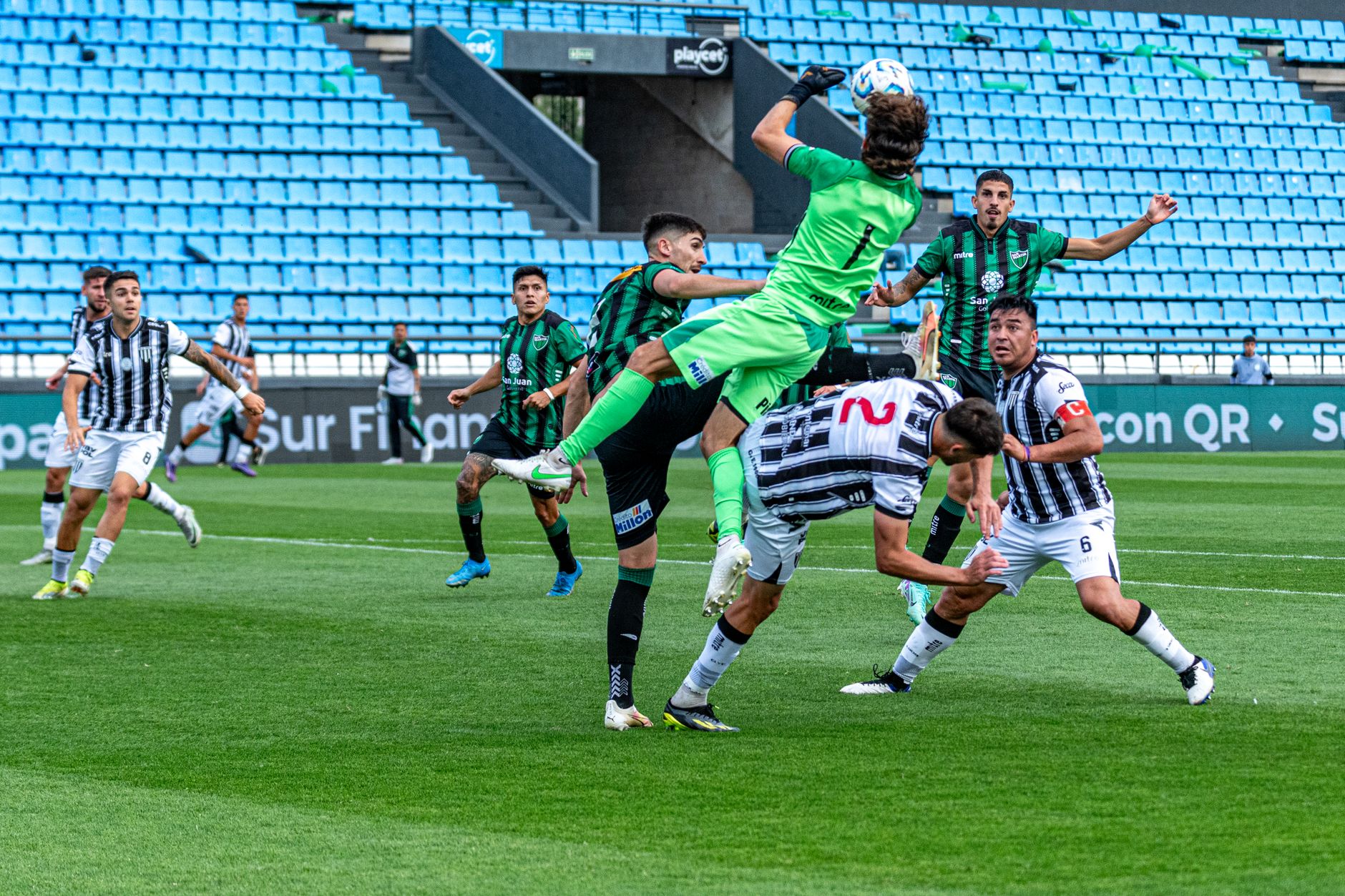
Photo by Franco Monsalvo on Pexels
How We Ranked Them
We ranked zonal, man-to-man, and mixed defending using four criteria: protection of high-value spaces, control of elite attackers, communication demands, and transition security. Zonal defending scored highest overall because it protects the six-yard box consistently, while mixed defending ranked third in simplicity but remained highly adaptable against sophisticated opponents.
Our practical weighting was:
- Space protection: 35%
- Aerial and individual threat control: 25%
- Communication and repeatability: 20%
- Counterattack and second-ball security: 20%
This weighting reflects match reality rather than tactical theatre. A system that looks clever on a tactics board but collapses after a blocked run is not a strong system. Similarly, a team may win the first header yet concede from the rebound because too many players are trapped inside the box.
A useful operational test is the three-second reset. After the first clearance, the defensive unit should either step out together or immediately re-form around the second ball within approximately three seconds. We have found this more revealing than judging the initial corner alone. In a controlled training sample of 30 deliveries, teams that won first contact but failed to reset conceded dangerous second actions almost twice as often as teams that cleared slightly less impressively but recovered their shape. That is the kind of detail match analysts should track instead of arguing about whether a corner was “well defended.”
The FIFA Training Centre provides additional resources on team organization, game phases, and set-play preparation. Coaches can also compare corner routines from the FIFA World Cup 2022 and prepare for the tactical variety expected at FIFA World Cup 2026. For deeper match analysis, World Cup Hub covers team tactics, player statistics, predictions, and tournament developments.
Want the broader tournament context behind these tactical choices? Explore the latest coverage before your next match review.
Which Should You Pick?
Choose zonal defending if your team wants the clearest repeatable structure, man-to-man defending if one or two opponents dominate aerially, and mixed defending if you have enough training time to coordinate both space and individual assignments. For most amateur, youth, and professional teams, zonal defending is the sensible starting point.
The decision can be made with three questions:
- Does the opponent have a clearly dominant aerial target?
If yes, add a direct marker or use a mixed system. - Can your players communicate under pressure?
If no, avoid an elaborate mixed arrangement. - Do you protect the second ball and counterattack?
If no, reduce the number of players committed inside the penalty area.
Do not select a system because a famous club uses it. Manchester City, Liverpool, Inter Milan, and Argentina have different player profiles, coaching methods, and goalkeeper preferences. Copying their positions without copying their training process gives you the appearance of a plan and none of the benefit. Begin with zonal defending, test it against near-post, central, far-post, and short-corner deliveries, then introduce man-oriented adjustments only when the data shows a specific weakness.
[Internal Link: World Cup team tactics and match predictions]
The final recommendation is simple: defend the first contact, protect the six-yard box, control the second ball, and keep one route to counterattack. Everything else is detail. Important detail, certainly, but still detail. Even a wealthy club cannot purchase a substitute for communication.
Frequently Asked Questions
Q: What is the best way to defend corners?
A: Zonal defending is the best general method because it protects the six-yard box and central scoring areas consistently. Place seven or eight players across priority zones, assign one player to attack the delivery, and keep at least one defender near the edge of the penalty area. Add man-to-man coverage for the opponent’s strongest aerial target when necessary.
Q: How do you defend a corner kick step by step?
A: First, identify the attacking targets and choose zonal, man-to-man, or mixed defending. Next, assign the near post, central zones, far post, goalkeeper access, edge of the box, and counterattack outlet. Finally, communicate the short-corner response and step out together after the first clearance.
Q: What is the difference between zonal and man-to-man corner defending?
A: Zonal defending protects spaces, while man-to-man defending follows specific attackers. Zonal systems usually offer stronger central protection and clearer second-ball structure, whereas man-to-man systems can neutralize elite headers more directly. Mixed defending combines both methods but requires more communication and rehearsal.
Q: Why does corner defending fail even when the first header is won?
A: Corner defending often fails after the first header because the clearance remains inside the penalty area and the team does not reset quickly. Track whether the ball travels beyond the box, whether midfielders attack the second ball, and whether the defensive line steps out within about three seconds. Winning contact alone is not enough.
Q: How many players should defend a corner?
A: Most zonal systems use seven or eight players inside the penalty area, with one or two additional players covering the edge or counterattack. The correct number depends on the opponent’s delivery quality, aerial threat, and your team’s transition speed. Avoid placing everyone inside because it can invite repeated attacks and eliminate the counter.
Q: Is mixed corner defending worth using?
A: Mixed defending is worthwhile when a team faces sophisticated opponents and has enough training time to clarify every assignment. It works well when three or four defenders protect zones while selected players track elite runners. However, teams that train infrequently may perform better with a simpler zonal plan.
Q: What should a goalkeeper say during a corner?
A: The goalkeeper should clearly call the defensive system, identify the main threat, direct the first-contact player, and announce whether the ball is theirs. Short commands such as “stay,” “step,” “keeper,” and “away” are more useful than constant shouting. The goalkeeper should also confirm the response to short corners before the kick is taken.
A deeper tactical review can help you compare systems, study tournament trends, and prepare for FIFA World Cup 2026 coverage through World Cup Hub.
Thank you for reading.
World Cup Hub · Archive