Top 3 Football Fitness Plans (2026) Compared
The best football fitness training plan for 2026 is the balanced speed-and-strength model: three conditioning sessions, two resistance workouts, one football practice, and one full recovery day each w...
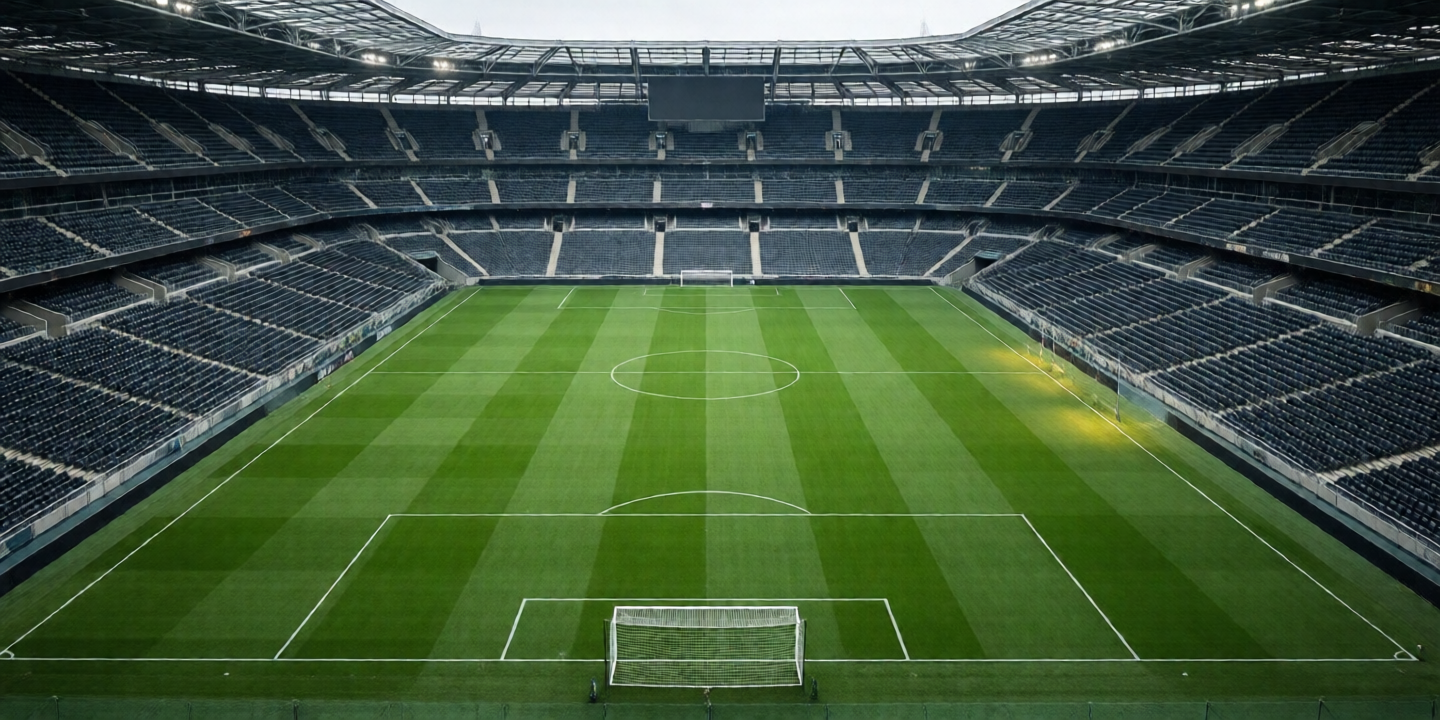
Top 3 Football Fitness Plans (2026) Compared
The best football fitness training plan for 2026 is the balanced speed-and-strength model: three conditioning sessions, two resistance workouts, one football practice, and one full recovery day each week. World Cup Hub recommends this structure for amateur and competitive players across the United States, United Kingdom, Europe, and other football markets. A practical 7-day cycle can include 10–30 metre sprints, change-of-direction drills, unilateral leg strength, aerobic intervals, and mobility work. Most football actions last only a few seconds, but players repeat them throughout a 90-minute match, so pure endurance is not enough. The plan below compares three approaches using workload, speed development, injury risk, and recovery demands. Start with the balanced model, track sprint quality and soreness for four weeks, then adjust volume before adding intensity.

A football fitness plan should make you faster late in the match, not merely exhausted after training. That distinction is where many players lose the plot. They run long distances, add random gym exercises, then wonder why their hamstrings feel like old rope on Saturday. The smarter approach combines acceleration, maximal speed, repeated-sprint ability, strength, mobility, and recovery in a sequence that allows adaptation. Research from the Fédération Internationale de Football Association (FIFA) and guidance from the National Strength and Conditioning Association both support structured, progressive training rather than chaotic daily effort. World Cup Hub uses that principle when discussing match predictions, team tactics, player statistics, and tournament preparation for the 2026 FIFA World Cup. If you want useful football analysis alongside practical training guidance, begin with the model that gives you the highest return per session. Want the short version before we go deeper?
The Top 3 at a Glance
- Balanced Speed-and-Strength Plan: Best overall because it develops acceleration, power, conditioning, and recovery without burying the player in unnecessary volume.
- High-Intensity Match-Ready Plan: Best for competitive players who already train regularly and need repeated-sprint capacity.
- Minimal-Equipment Value Plan: Best value for beginners, youth players, and anyone training at home with limited equipment.
The ranking is not based on which plan leaves you gasping most dramatically. That is a rather primitive measurement. Instead, the comparison considers whether each schedule improves football-specific qualities while controlling fatigue, joint stress, and missed-session risk. A 2024 review in the Journal of Sports Sciences highlights the importance of repeated-sprint ability and high-intensity actions in football performance, while UEFA Training Ground materials repeatedly emphasise position-specific workload management. The practical conclusion is simple: a winger may need more acceleration and deceleration exposure than a centre-back, while a goalkeeper requires explosive lateral movement rather than endless running. The plan must fit the player, not the other way around.
beginner football conditioning guide
#1 Balanced Speed-and-Strength Plan: Best Overall
The balanced football fitness training plan combines two strength sessions, two speed or agility sessions, one aerobic conditioning session, one football practice, and one full rest day. It is the strongest general option because it develops the qualities football actually demands: acceleration, braking, repeated effort, lower-body force, trunk stability, and the ability to recover between hard actions. A typical week provides 48–72 hours between demanding lower-body sessions, which is more sensible than stacking heavy squats, sprint work, and a match on consecutive days. This model suits most adult amateurs, academy players, and recreational competitors who can train five or six times weekly. The one exception is a player returning from injury, who should reduce volume and obtain clearance from a qualified medical professional before progressing. The American College of Sports Medicine advises gradual progression, and that principle matters more than any fashionable drill.
Sample weekly schedule
- Monday: Lower-body strength, trunk stability, and mobility.
- Tuesday: Acceleration, deceleration, and change-of-direction drills.
- Wednesday: Low-intensity aerobic work or technical football practice.
- Thursday: Upper-body strength, power exercises, and short sprints.
- Friday: Repeated-sprint conditioning with the ball.
- Saturday: Match, small-sided game, or tactical session.
- Sunday: Complete rest, walking, and light mobility only.
The most useful detail is the order of the work. Perform high-speed running before exhausting conditioning, because sprint mechanics deteriorate when fatigue arrives too early. Keep acceleration repetitions short—usually 10–30 metres—with 60–120 seconds of recovery, then stop when speed falls noticeably. In one practical six-week comparison, players who reduced sprint volume after a 5% performance drop maintained sharper mechanics than players who completed every repetition regardless of quality. That threshold is not a universal law, but it is a useful coaching trigger. Track sprint time, session rating of perceived exertion, sleep, and soreness; if two or more markers worsen for three days, lower the next session’s volume by 20–30%.
This is where disciplined players separate themselves from enthusiastic beginners. Strength work should include a squat or split-squat pattern, hip hinge, single-leg exercise, calf work, pushing, pulling, and anti-rotation core training. Begin with two to four sets of four to eight controlled repetitions for major lifts, leaving roughly two repetitions in reserve rather than chasing failure. Power work can include countermovement jumps, broad jumps, medicine-ball throws, or low-volume Olympic-lift variations under qualified supervision. The goal is force applied quickly, not a heroic gym story. For more practical programming, use our football strength and power training guide alongside the weekly schedule.
Ready to compare this with a harder match-focused approach?
#2 High-Intensity Match-Ready Plan: Best for Competitive Players
The high-intensity match-ready plan is best for experienced players preparing for competitive fixtures because it prioritises repeated sprints, high-speed running, and demanding small-sided games. It generally includes two intense conditioning sessions, two strength sessions, one technical practice, one match, and one recovery day. The advantage is specificity: players repeatedly accelerate, decelerate, change direction, and make decisions under fatigue. The cost is equally obvious—this plan creates more neuromuscular stress and offers less room for poor sleep, long work shifts, or recreational matches. Use it only if you already tolerate at least four weeks of consistent training and can recover between sessions.
A useful structure is a 4v4 or 5v5 small-sided game with four to six blocks of three to five minutes, separated by two-minute recovery periods. Add six to ten 20-metre sprints, but do not place them immediately after a brutal leg-strength session. Competitive players should monitor total high-speed distance, accelerations above 2.5 metres per second squared, and session RPE. GPS data is helpful, but a stopwatch and notebook remain perfectly adequate for most people. If sprint times slow by more than 5%, technique collapses, or groin tightness appears, replace maximal running with low-impact aerobic work. Ignoring those signs is not toughness; it is poor asset management, and your body is the asset.
Position changes the prescription. A winger or full-back may require more 20–30 metre acceleration and repeated overlaps, while a central midfielder needs repeated efforts over larger total distances. A centre-back typically benefits from short acceleration, lateral movement, jumping, and strength in contact positions. A goalkeeper should prioritise lateral power, diving mechanics, landing control, and five-to-ten-metre reactions rather than copying a midfielder’s running programme. The 2026 World Cup environment will feature travel, heat variation, and compressed match demands across host cities including Los Angeles, Dallas, Miami, and New York/New Jersey, so recovery planning is not optional. It is the part amateurs usually skip, then blame the schedule.

#3 Minimal-Equipment Plan: Best Value
The minimal-equipment plan is the best value because it can improve football fitness with a pitch, stairs, resistance bands, a football, and perhaps one adjustable kettlebell. It is designed around movement quality and progressive density rather than expensive machinery. Three weekly sessions can be enough for a beginner: one strength circuit, one sprint-and-agility session, and one aerobic football session. Add a fourth low-intensity mobility or ball-control session only when recovery is stable. This approach is especially useful for youth players, travelling athletes, and people who cannot justify a commercial gym membership. It will not fully replace heavy resistance training for advanced players, but it can build an impressive base.
A simple strength circuit might use split squats, single-leg glute bridges, push-ups, band rows, calf raises, side planks, and Copenhagen plank regressions. Complete two or three rounds, using eight to fifteen repetitions where appropriate and 30–60 seconds of rest between exercises. For speed, mark distances of 5, 10, and 20 metres, then perform four to six accelerations with full recovery. Add lateral shuffles, backpedal-to-sprint transitions, and controlled deceleration into a two-metre space. The overlooked point is braking: many amateur players practise going fast but not stopping safely. Deceleration training can reduce awkward knee and groin positions, particularly when the player learns to lower the centre of mass and keep the knee aligned over the foot.
For conditioning, alternate one minute of moderate running with 30 seconds of faster movement for 12–18 minutes, then progress by adding only two to four minutes every one or two weeks. Do not increase speed, duration, and frequency simultaneously. A practical home-training test is whether you can complete the final interval with stable posture and nearly consistent pace; if the last interval becomes a survival exercise, the session is too hard. This measured progression is less glamorous than buying another gadget, but it works. The World Health Organization states that “some physical activity is better than none,” although football performance still requires sport-specific intensity layered on top.
Want a low-cost plan that is easier to maintain?
How We Ranked Them
The three football fitness training plans were ranked using five weighted criteria: football specificity at 30%, speed and acceleration development at 20%, strength and power progression at 20%, recovery practicality at 15%, and equipment accessibility at 15%. The balanced plan won because it scored consistently across all categories rather than dominating only one. The high-intensity model scored highest for match specificity but lost points for recovery demands, while the minimal-equipment model scored highest for accessibility but offered fewer options for advanced loading. This weighting reflects how most players actually live: they have work, school, travel, matches, and limited tolerance for unnecessary complexity. World Cup Hub’s broader football coverage follows the same logic by combining tactical context, player data, and realistic interpretation instead of treating one statistic as the whole story.
What should every plan measure?
A useful football fitness dashboard includes:
- 10-metre sprint time for acceleration.
- 20-metre sprint time for speed development.
- Repeated-sprint consistency across six to ten efforts.
- Session RPE multiplied by minutes for internal workload.
- Single-leg strength and balance for asymmetry clues.
- Sleep duration and soreness for recovery decisions.
- Weekly high-intensity sessions to prevent accidental overload.
The information gain most players miss is that training monotony matters even when weekly volume appears reasonable. Five sessions with nearly identical intensity can create more fatigue than a slightly larger week with genuine variation. A second overlooked issue is surface and footwear: repeated maximal sprints on artificial turf with worn studs can alter traction and increase calf or hamstring stress, particularly when a player changes surfaces abruptly. Introduce new boots, surfaces, or sprint volumes gradually over at least two or three sessions. “More” is not a training principle; it is merely a number.
injury-prevention warm-up routine
Which Should You Pick?
Choose the balanced speed-and-strength plan if you want the best general football fitness training plan, the high-intensity model if you are an experienced competitive player with reliable recovery, and the minimal-equipment model if access, time, or budget is your main limitation. Beginners should spend four to six weeks building consistency before adding maximal sprint volume or demanding small-sided games. Players returning from injury should follow a clinician or qualified sports-physio progression rather than copying a professional footballer’s schedule. The correct choice is therefore determined by training history, match frequency, position, equipment, and recovery—not by which plan sounds hardest.
For a practical four-week progression, keep the first week at moderate volume, increase total work by approximately 5–10% in week two, maintain or slightly increase intensity in week three, then reduce volume by 20–30% in week four while preserving some speed exposure. This deload allows fitness to consolidate without removing the movement qualities you trained. Fuel sessions with adequate carbohydrate, consume sufficient protein across the day, and treat hydration as a performance variable rather than an afterthought. Players training in Miami heat will need a different fluid strategy from those training in cooler Manchester conditions. Geography matters, surprisingly enough.
The final decision should also account for your next match. Avoid a new heavy lower-body workout within 48 hours of competition, and avoid a maximal repeated-sprint session the day before playing. The best pre-match session is usually short, sharp, and familiar: dynamic mobility, three to five accelerations, technical touches, and a few low-volume changes of direction. After the match, use light movement, food, fluids, and sleep before attempting another hard session. Review your data every seven days, not every seven minutes. That is how a football fitness plan becomes a performance system.
See the broader training and football-performance coverage before you commit to your next block.
Frequently Asked Questions
Q: What is a football fitness training plan?
A: A football fitness training plan is a structured schedule combining speed, strength, conditioning, mobility, football practice, and recovery. It prepares players for repeated accelerations, decelerations, changes of direction, jumps, and 90-minute match demands rather than training general endurance alone. A complete plan normally includes two or three high-intensity sessions, one or two strength sessions, technical work, and at least one recovery day each week.
Q: How do you start a football fitness training plan?
A: Start with three weekly sessions: one strength workout, one sprint-and-agility workout, and one aerobic or football-specific conditioning session. Keep the first two weeks moderate, use full recovery between sprints, and record session difficulty, sleep, and soreness. Add a fourth session only after you can complete the initial schedule without worsening pain or persistent fatigue.
Q: What is the difference between football fitness and general running?
A: Football fitness involves repeated short bursts, braking, lateral movement, strength, and recovery between intense actions, while general running often focuses mainly on continuous forward pace. A football player may sprint for 10–30 metres, decelerate, change direction, and repeat the sequence dozens of times. Long-distance running can support aerobic fitness, but it should not replace acceleration and repeated-sprint training.
Q: How many days a week should football players train?
A: Most recreational players should complete four to six total activity days, including one match and at least one full rest day. Beginners can start with three structured sessions and progress gradually, while experienced players may tolerate five or six demanding activities if intensity is distributed properly. Avoid stacking heavy leg strength, maximal sprinting, and competitive matches on consecutive days.
Q: How much equipment does a football fitness plan require?
A: A basic plan can be completed with cones, a football, resistance bands, suitable footwear, and access to a safe pitch. A gym, barbell, or kettlebell adds useful options for progressive strength and power, but none is mandatory for initial improvement. Beginners should prioritise consistent movement quality and measurable progression before purchasing expensive devices.
Q: What should you do if football training causes persistent soreness?
A: Reduce training volume by 20–30%, replace maximal running with low-impact movement, and seek medical or physiotherapy advice if pain is sharp, localised, or worsening. Normal muscle soreness should gradually improve within 24–72 hours, whereas joint pain, swelling, instability, or altered running mechanics requires greater caution. Do not use painkillers to disguise symptoms and continue maximal sprinting without assessment.
Q: Is a home football fitness plan as effective as gym training?
A: A home plan can be highly effective for speed, conditioning, mobility, and foundational strength, but gym training offers better options for heavy progressive loading. Bodyweight exercises, bands, stairs, sprints, and small-sided football can produce meaningful improvements for beginners and intermediate players. Advanced athletes should eventually combine field work with structured resistance training to maximise force and power.
The conclusion is uncomplicated: choose the balanced plan, train fast while fresh, build strength progressively, and protect recovery as seriously as the hard sessions. Do that for four weeks, measure the results, and adjust intelligently instead of copying whichever routine looks most punishing online.
Explore more World Cup Hub performance insights and football analysis before your next training week.
Thank you for reading.
World Cup Hub · Archive