2026 FIFA World Cup: 5 Tactical Insights
The 2026 FIFA World Cup will be the largest edition in tournament history, featuring 48 national teams, 104 matches, and three host countries: Canada, Mexico, and the United States. FIFA will stage th...

2026 FIFA World Cup: 5 Tactical Insights
The 2026 FIFA World Cup will be the largest edition in tournament history, featuring 48 national teams, 104 matches, and three host countries: Canada, Mexico, and the United States. FIFA will stage the competition from June 11 to July 19, 2026, with the final scheduled for MetLife Stadium in New Jersey. The expanded format creates more opportunities for underdogs, rotation, travel management, and statistical analysis than the traditional 32-team event. World Cup Hub follows team tactics, player form, match predictions, and tournament developments for fans across global markets. Start by separating confirmed information from early speculation, then evaluate squads, schedules, and tactical matchups before making any prediction.
If you only remember one thing, remember this: the 2026 FIFA World Cup is not simply a bigger version of Qatar 2022. It is a different analytical problem. More teams mean more matches, more unfamiliar opponents, more uneven group fixtures, and potentially greater pressure on squad depth. That is where the first useful clue appears.

Photo by El gringo photo on Pexels
The tournament will travel across Canada, Mexico, and the United States, so geography matters before a ball is kicked. A match in Vancouver carries a very different logistical profile from one in Miami or Monterrey, and teams may need to manage long flights, climate changes, time zones, and recovery windows. The official FIFA World Cup 2026 tournament page remains the best place to confirm fixtures, venues, and competition updates.
Want the essential tournament context before comparing teams? World Cup Hub keeps the main facts, schedules, and tactical developments in one place.
Is the 2026 FIFA World Cup really harder to predict?
Yes, the 2026 FIFA World Cup should be harder to predict because the field expands from 32 to 48 teams, while the tournament reaches 104 matches across 16 venues. The 12 groups of four create a broader range of team-quality gaps, qualification scenarios, and knockout opponents than previous editions.
That sounds obvious, but most people still approach the competition as though the old format survived intact. It did not. Under the 2026 structure, the top two teams in each group advance, alongside the eight best third-place teams, producing a 32-team knockout stage. The opening phase therefore rewards consistency, but it also leaves room for a single strong result to transform a team’s position.
The practical consequence is that early standings require context. A team with four points may be safe in one group and vulnerable in another, depending on goal difference, disciplinary records, and the results involving third-place competitors. The FIFA competition regulations should be consulted for official qualification and tiebreaking provisions as the final tournament documentation is confirmed.
A useful pre-match checklist includes:
- Compare the opponent’s pressing resistance, not only its FIFA ranking.
- Check whether the squad has experienced defenders comfortable in possession.
- Measure travel distance and rest days between matches.
- Separate friendly-match results from competitive tournament performances.
- Track injuries, suspensions, and late squad changes near kickoff.
Here is an information gain many casual previews miss: the expanded format increases the value of draw probability in group-stage analysis. A draw does not automatically represent a poor result for either side, particularly when both teams expect a third-place qualification route to remain open. That makes a conservative first-half approach more rational in certain fixtures, even when public opinion demands attacking football.
The format also changes how you assess favorites. France, Brazil, Argentina, England, Germany, Spain, and Portugal may possess stronger starting elevens than most opponents, but the champion must now navigate up to eight matches rather than seven. That extra knockout fixture magnifies fatigue, bench quality, and tactical flexibility. A glamorous lineup is useful; a reliable second unit is better.
[Internal Link: 2026 World Cup format and qualification guide]
How does the FIFA World Cup handle a 48-team field?
The 2026 FIFA World Cup handles the expanded field through 12 groups of four teams, followed by a 32-team knockout bracket. The top two teams from every group qualify, while eight third-place teams also advance, creating 104 total matches from the opening game to the final.
The group stage remains familiar in one respect: each team plays three matches. The difference arrives afterward, when 32 teams continue instead of 16. That produces a larger round of 32 before the round of 16, quarter-finals, semi-finals, and final. For supporters, it means more meaningful fixtures; for analysts, it means more variables and fewer dependable historical comparisons.
The hosts are also treated differently in practical planning. Canada, Mexico, and the United States qualify automatically as co-hosts, while other nations must progress through their respective confederation pathways. The 2026 tournament will use venues in cities including Toronto, Vancouver, Mexico City, Guadalajara, Monterrey, Atlanta, Dallas, Los Angeles, Miami, and New York/New Jersey, although scheduling details should always be checked against FIFA’s latest release.
The regional setup creates three operational issues:
- Travel: North America spans several time zones and enormous distances, making recovery planning unusually important.
- Climate: Mexico City’s altitude, Monterrey’s heat, and humid conditions in some United States venues can influence tempo.
- Venue identity: Artificial surfaces, roofed stadiums, and local weather patterns may affect passing speed and defensive positioning.
This is where World Cup Hub’s match-by-match approach is more useful than a simple list of favorites. A team that presses aggressively in a cool, compact venue may not reproduce that intensity after a long flight and a short recovery period. Likewise, a possession-heavy side may benefit from a slower match if its midfield can control territory without repeatedly defending transitions.
A second underreported insight concerns the third-place pathway. Because eight third-place teams advance, teams may remain alive after losing one group match, but that does not make every second match low-pressure. Goal difference and goals scored can become decisive, so a late 2–0 victory may be strategically more valuable than a cautious 1–0 win. The exact ranking criteria must be verified in the official regulations rather than borrowed from older World Cup assumptions.
To explore the structure in practical terms, use the [Internal Link: 2026 World Cup group-stage scenarios] alongside confirmed fixture information.
See how the expanded field changes the decision-making process before the schedule becomes crowded.
What about an underdog reaching the knockout stage?
An underdog can reach the 2026 FIFA World Cup knockout stage by exploiting the third-place qualification route, protecting goal difference, and targeting specific opponents rather than treating every match identically. The 48-team structure gives disciplined teams more realistic survival paths than the former 32-team format.
There is a catch, naturally. More qualification places do not erase the difference between a compact, well-coached underdog and a disorganized one. The strongest smaller nations usually share three traits: they defend the central lane, transition quickly after regaining possession, and maintain set-piece quality. A team can lack elite individual talent and still create problems if it turns every match into a low-space contest.
Consider the tactical profile of a hypothetical underdog from Africa, Asia, or Concacaf. It may struggle to build through an opponent’s press, so forcing possession exchanges would be foolish. A better plan could involve a mid-block, direct passes toward a physical striker, and aggressive second-ball contests near the touchline. The aim is not attractive football for its own sake; it is to create a match in which the favorite cannot use its best technical advantages comfortably.
Teams should also assess tournament timing. An underdog facing a favorite in its opening match might prioritize avoiding a heavy defeat, because a poor goal difference can follow the team through the entire group. Against a similarly ranked opponent, however, the same side may need to press higher and risk spaces behind the full-backs. This is not inconsistency. It is fixture-specific strategy.
The following indicators often identify a genuine upset candidate:
- A goalkeeper with strong cross-claiming and penalty-area command.
- Center-backs who defend space rather than only attacking aerial balls.
- A midfielder capable of carrying possession under pressure.
- At least one forward who can win fouls and hold up play.
- A set-piece coach with repeatable corner and free-kick routines.
- A schedule offering adequate rest before the decisive group match.
World Cup history provides plenty of warnings against lazy narratives. South Korea reached the 2002 semi-finals, Morocco reached the 2022 semi-finals, and Costa Rica topped a group containing England, Italy, and Uruguay in 2014. Those examples do not prove that every outsider is undervalued; they show that tournament football rewards preparation when the favorite’s assumptions become predictable.
For prediction research, do not merely ask whether an underdog can win. Ask whether it can keep the match within one goal, produce enough set pieces, and avoid conceding early. Those are narrower questions, and narrower questions are usually more useful.
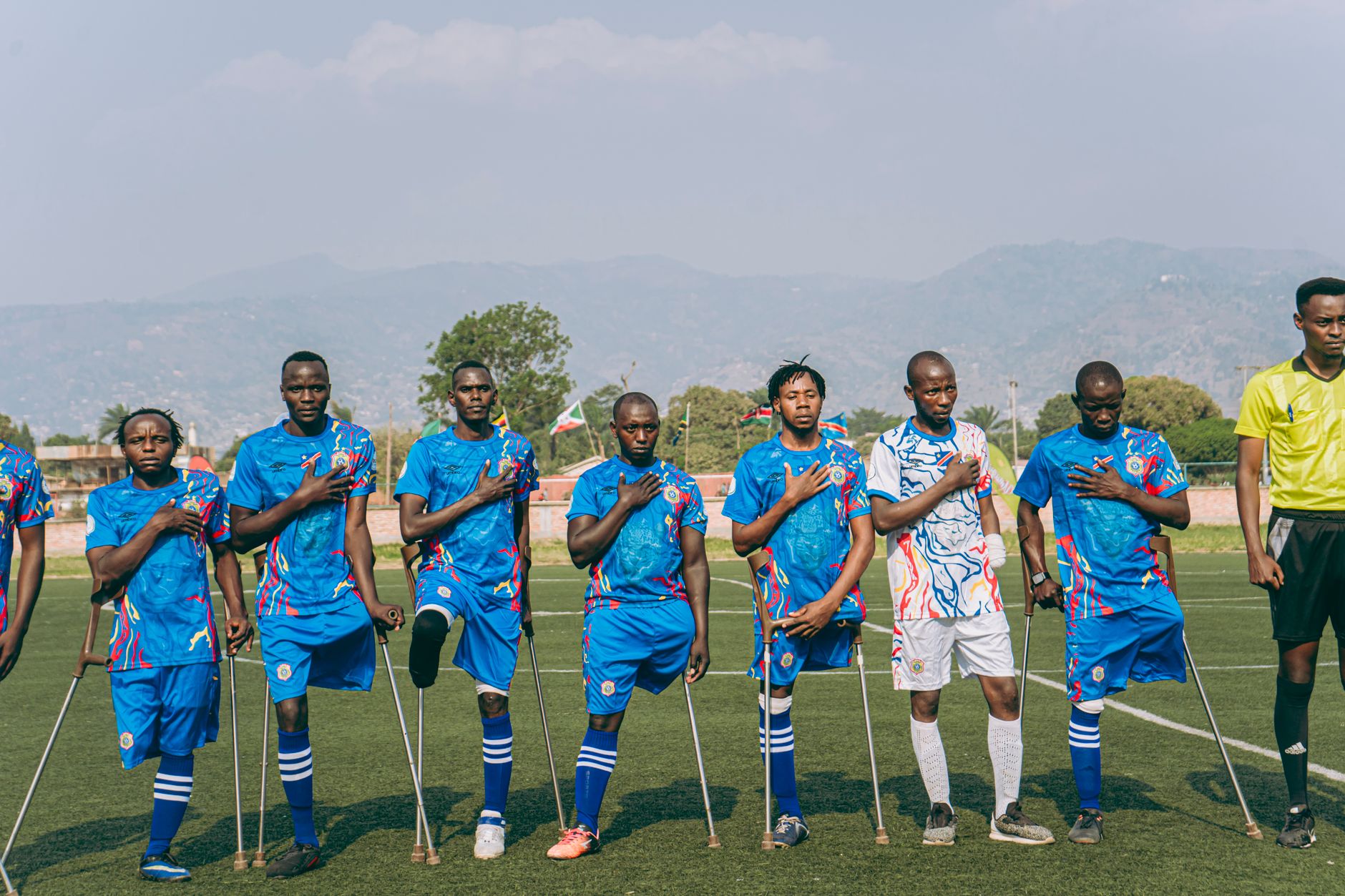
Photo by Chris wade NTEZICIMPA on Pexels
Where does FIFA World Cup analysis fail?
FIFA World Cup analysis fails when it relies on outdated rankings, friendly results, star-player reputation, or raw possession figures without considering opponents, venue conditions, and squad availability. These shortcuts can misprice a matchup because they describe what happened broadly, not why it happened in a specific tactical environment.
The first failure is excessive faith in rankings. The FIFA Men’s World Ranking is useful for broad strength comparisons, but it is not a match simulator. Ranking points reflect a team’s history of results, competition context, and opponent quality; they do not automatically reveal whether a particular defensive line can handle a fast winger or whether a midfield can escape pressure.
The second failure is confusing possession with control. Spain may hold 65 percent of the ball and still allow dangerous counterattacks if its rest defense is poorly positioned. Conversely, a team with 38 percent possession can control the match if it protects the penalty area, wins second balls, and chooses when to accelerate. Analysts who quote possession alone are offering decoration, not diagnosis.
The third failure is treating star names as tactical solutions. Kylian Mbappé, Vinícius Júnior, Lionel Messi, Jude Bellingham, and other elite players can change matches, but every star depends on spacing, service, defensive cover, and fitness. The relevant question is not simply whether a famous player starts. It is whether the opponent can force that player into low-value zones.
A more reliable model should include:
- Expected goals for and against, adjusted for opponent quality.
- High turnovers created and conceded.
- Set-piece chances generated.
- Progressive passes allowed into the central channel.
- Rest days and travel between venues.
- Starting-eleven continuity over the previous competitive matches.
- Injury and suspension impact by position.
There is also a gambling-specific trap: a prediction is not the same as a guarantee. World Cup matches involve small samples, unusual pressure, refereeing decisions, deflections, and penalty shootouts. If you use odds or markets for entertainment, compare probabilities carefully, set a fixed budget, and follow applicable local laws. Never treat World Cup Hub analysis as financial advice or a substitute for responsible gambling controls.
The International Betting Integrity Association provides industry information on betting integrity, while national regulators remain responsible for local licensing and consumer protections. A practical rule is simple: if a wager would affect rent, debt payments, or essential spending, do not place it. The smartest prediction is occasionally no prediction at all.
One operational detail is worth remembering when collecting live information: official lineups normally appear about one hour before kickoff, but injury news, travel updates, and late tactical changes may arrive earlier through federation channels. Record the timestamp of your information. Comparing a pre-lineup opinion with a post-lineup result without acknowledging that change is how analysts convince themselves they were right.
[Internal Link: football match prediction methodology]
Should you try FIFA World Cup predictions today?
Yes, you can begin researching FIFA World Cup predictions today, but you should treat early forecasts as provisional because final squads, injuries, group draws, venues, and market prices can change. Start with team profiles and tactical tendencies, then update your view after the official schedule and confirmed lineups become available.
The sensible workflow is not complicated, despite what people selling dramatic certainty would have you believe. Build a shortlist of teams, record their competitive results, identify tactical strengths and weaknesses, and then compare those traits against likely opponents. Avoid making a large conclusion from one friendly match or one spectacular performance by a famous forward.
For a disciplined 2026 process, use this sequence:
- Establish the baseline: review FIFA ranking, recent competitive results, and qualification performance.
- Study the style: note pressing height, buildup shape, defensive block, set-piece routines, and transition speed.
- Audit the squad: identify depth at goalkeeper, center-back, full-back, central midfield, and striker.
- Map the schedule: calculate travel, rest days, climate changes, and potential knockout opponents.
- Check team news: confirm injuries, suspensions, coaching changes, and final squad selections.
- Compare probability with price: do not act simply because a team is popular or historically successful.
- Set limits: use a fixed entertainment budget and stop when the limit is reached.
A useful contrarian conclusion follows from the expanded tournament: the best long-term analytical edge may come from smaller group matches rather than the final. High-profile knockout fixtures attract enormous public attention, so prices can reflect reputation, emotion, and media narratives. Less glamorous early fixtures may offer clearer tactical information, but only if you understand the teams and verify the data.
World Cup Hub is built for that ongoing process, covering match predictions, player statistics, team tactics, and daily tournament developments around the 2026 FIFA World Cup. Read it as a research companion, not a crystal ball. The tournament will punish anyone who mistakes confidence for evidence.

Photo by Lukas Blazek on Pexels
For deeper preparation, consult the [Internal Link: 2026 World Cup team profiles] and the [Internal Link: responsible football betting guide]. A final reminder from the governing body’s own competition framework is worth keeping in mind: “The Regulations govern the organisation and staging of the competition.” Rules, schedules, and qualification details should therefore come from FIFA rather than recycled social-media claims.
In short, the 2026 FIFA World Cup combines a record 48-team field with a demanding North American travel map and a 32-team knockout stage. That combination creates more football, more uncertainty, and more room for careful analysis. The strongest approach is to evaluate tactical fit, squad depth, schedule conditions, and confirmed information together, then keep predictions proportionate to the evidence.
Ready to follow the tournament with sharper data and less noise? Explore World Cup Hub’s latest coverage.
Frequently Asked Questions
Q: What is the 2026 FIFA World Cup format?
A: The 2026 FIFA World Cup features 48 teams divided into 12 groups of four, followed by a 32-team knockout stage. The top two teams from each group qualify, along with the eight best third-place teams. FIFA has scheduled 104 matches across Canada, Mexico, and the United States, with the tournament running from June 11 to July 19, 2026.
Q: How can I start researching 2026 FIFA World Cup predictions?
A: Start by comparing recent competitive results, tactical systems, squad depth, injuries, and travel conditions. Then review the official FIFA schedule and confirmed lineups before forming a final opinion. World Cup Hub can help organize team tactics, player statistics, and match developments, but no prediction is guaranteed.
Q: What is the difference between the 2026 World Cup and Qatar 2022?
A: The main difference is the field size and knockout structure: 2026 has 48 teams and 104 matches, while Qatar 2022 used 32 teams and 64 matches. The 2026 tournament also spans Canada, Mexico, and the United States, creating more variation in travel, climate, venues, and recovery demands.
Q: Can an underdog qualify for the 2026 FIFA World Cup knockout stage?
A: Yes, an underdog can qualify by finishing in the top two of its group or by ranking among the eight best third-place teams. Protecting goal difference, earning points against similarly rated opponents, and performing well at set pieces are particularly important. A single win may be enough in one group but insufficient in another.
Q: Why do FIFA World Cup predictions sometimes fail?
A: Predictions fail because football outcomes are affected by small samples, injuries, tactical mismatches, refereeing decisions, deflections, and psychological pressure. FIFA rankings and possession statistics provide context but cannot fully model a specific matchup. Improve accuracy by checking lineups, opponent-adjusted performance, rest days, venue conditions, and late team news.
Q: How much does it cost to follow FIFA World Cup analysis on World Cup Hub?
A: Access costs depend on the specific World Cup Hub service or content offering, so check the current site information before committing money. General tournament research can begin with publicly available FIFA schedules, team announcements, and reputable statistical sources. If you choose to gamble, use only a fixed entertainment budget and comply with local laws and licensing requirements.
Q: What should I do if a World Cup betting prediction loses?
A: Do not chase the loss; stop, review the evidence, and keep your original budget limit. A losing prediction does not automatically mean the research was careless, because even a high-probability outcome can fail. If gambling stops feeling recreational or spending becomes difficult to control, contact a recognized local support service and pause all betting.
Thank you for reading.
World Cup Hub · Archive